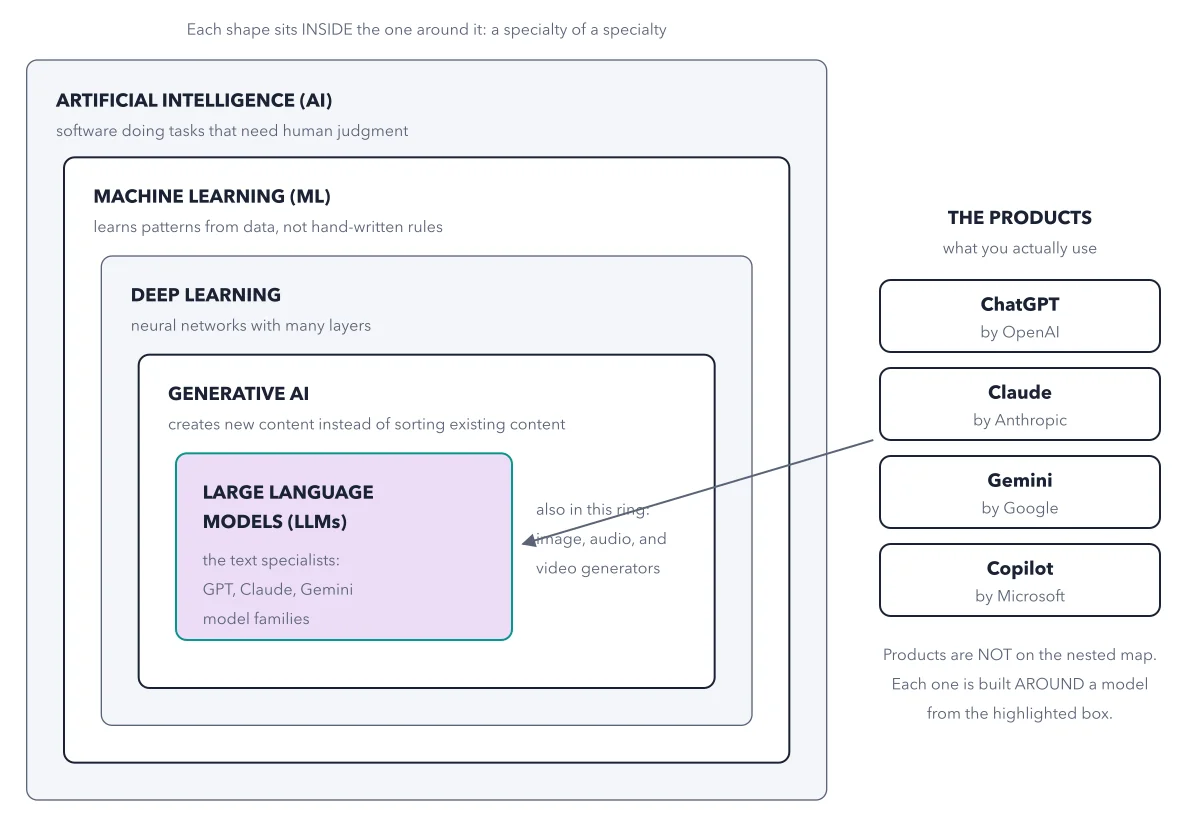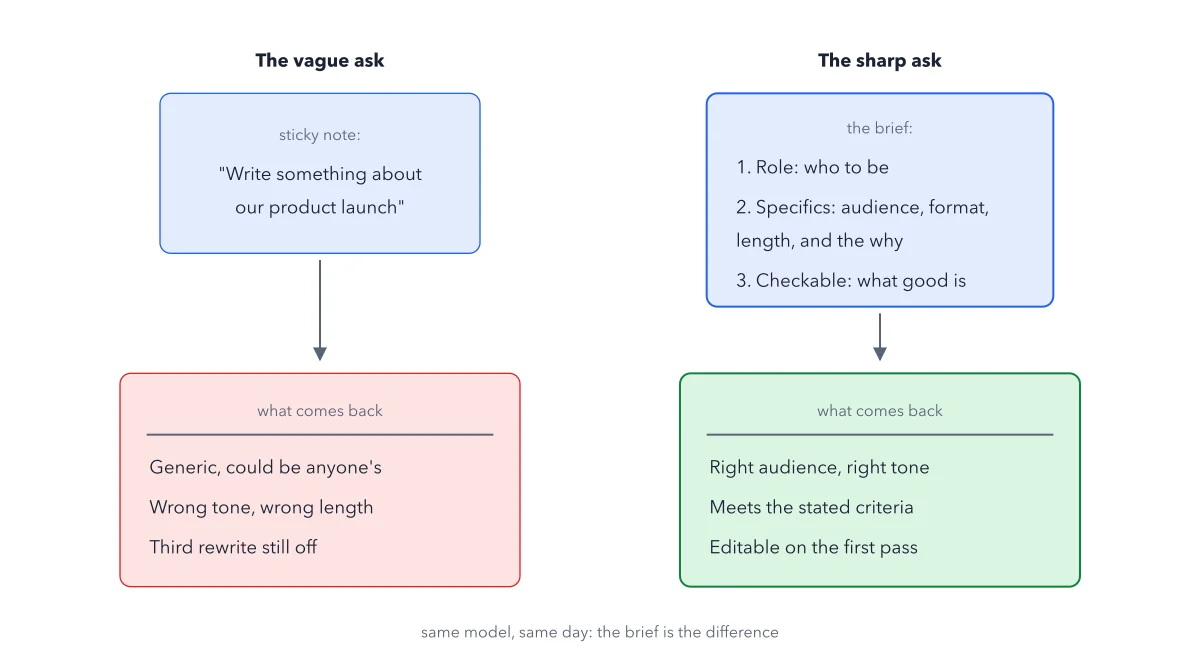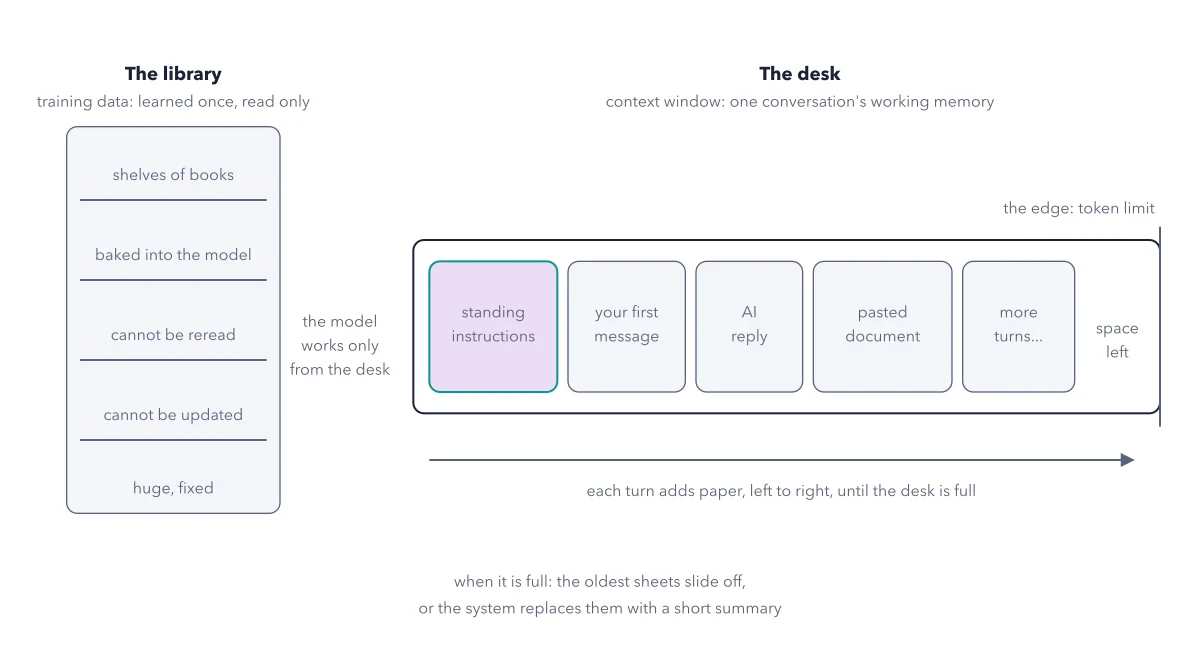
Is ChatGPT a model? No: it is a car built around one
By Christophe Paka · Facts checked on 23 October 2026
You compare two AI tools and one feels smarter. Is it the model, or the app around it? Vendors use the same name for both, so the question never gets a clear answer, and you end up judging the wrong thing.
So, is ChatGPT a model? No. It is a product, and the model is one part inside it, the way an engine sits inside a car. The figure below puts the engine and the car side by side, so you can see what you are really buying and judging.
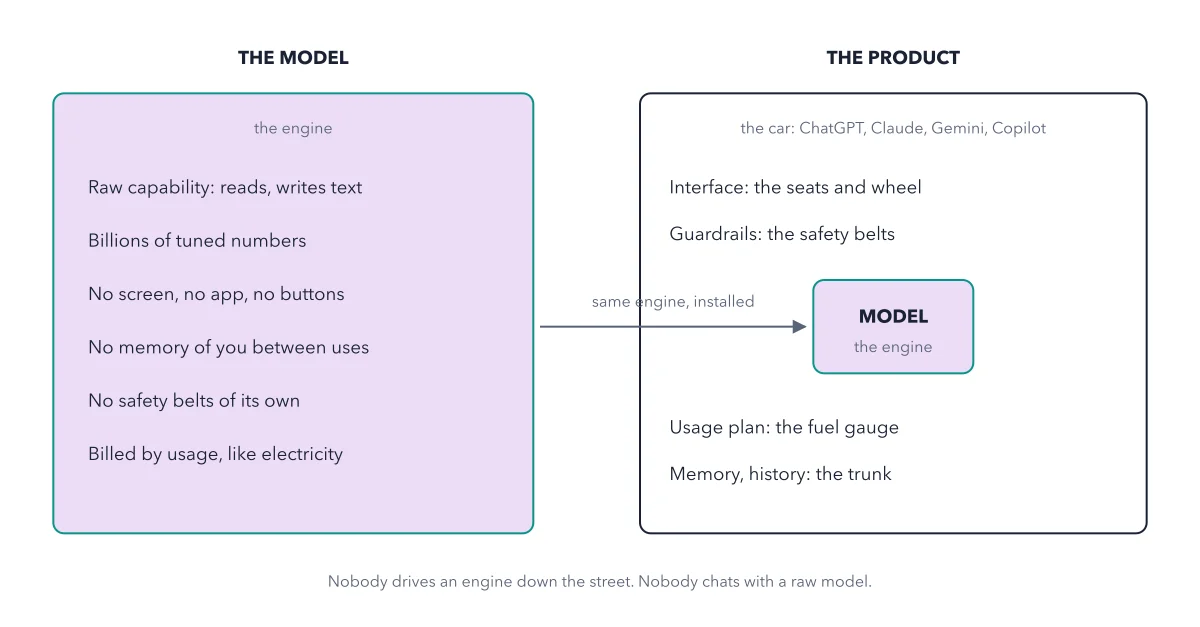
How to read this figure
Read the engine on the left. The model is raw capability: it reads and writes text. Inside it are billions of tuned numbers. It has no screen, no app and no buttons, and no memory of you between uses.
Note what the engine lacks. The model has no safety belts of its own, and it is billed by usage, like electricity. Nobody chats with a raw model, the same way nobody drives an engine down the street.
Read the car on the right. The product, such as ChatGPT, Claude, Gemini or Copilot, adds an interface (the seats and wheel) and guardrails: safety checks that stop harmful requests and answers. Those are the safety belts.
Find the engine inside the car. The same model sits inside the product as its engine. The product adds a usage plan, the fuel gauge, and memory and history, the trunk where saved chats and notes live.
Read the bottom line. You buy and judge the whole car. A great engine in a poor car still gives you a poor ride, and the reverse is true too.
Key takeaways
- Judge the whole car, not the engine: interface, safety checks, plan and history.
- Ask every vendor which model sits inside and what happens when it changes.
- Before you blame the work app, compare its plan, model and settings with the one at home.
Worked example: why the work tool feels worse than the one at home
A manager finds that the AI tool at work gives weaker answers than the one she uses at home. Use the figure to find the cause.
- Check the engine: does the work app run the same model, or a smaller one from the same family?
- Check the fuel gauge: is the work plan a different tier with different limits?
- Check the safety belts and settings: did the company switch on stricter rules or turn memory off?
Result: The difference usually sits in the car, not in her skill. She now has three concrete things to ask IT about, instead of a vague feeling.
Questions readers ask
ChatGPT, Claude or Gemini: which should we use?
Compare the whole product, not only the model inside. Look at the interface, the safety checks, the plan and the history features. And ask each vendor which model the product uses and how you will hear about a change before it lands.
Why does the work Copilot feel worse than what I use at home?
The two cars differ even when the names match. The plan, the model inside and the settings can all be different. Compare those three before you decide the tool, or you, is the problem.
Can an AI app change without telling me?
Yes. A carmaker cannot swap your engine overnight, but an AI company can swap the model inside its app while the seats stay the same. That is why the vendor question matters: which model is inside, and what happens when it changes?
Sources: OpenAI API: Models; Google Machine Learning Glossary.
This figure is from AI Made Crystal Clear, chapter 2.
The chapter builds the idea step by step, with recipes you can follow, a Try it to check yourself, and every source.
Get the book