ElevenLabs Made Crystal Clear · chapter 3: Zero to First Speech
Anatomy of a text-to-speech request
2026-10-16
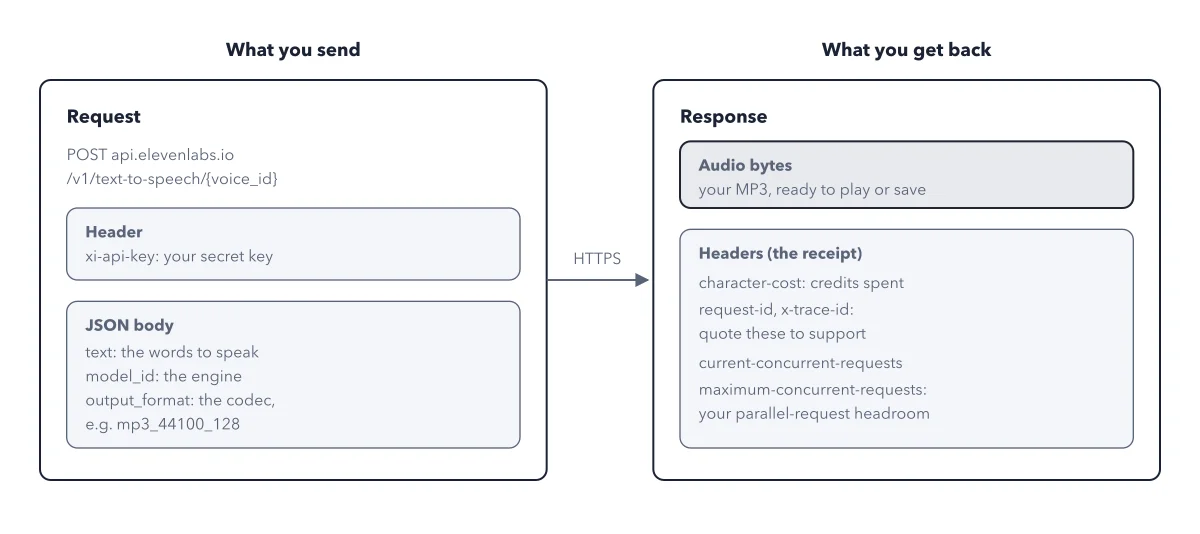
The voice travels in the URL, the key in the xi-api-key header, and the other three order-form fields in the JSON body. The response is audio plus a receipt: cost, trace identifiers, and concurrency headroom.
Below: the paragraph from the book that builds this idea, then the diagram itself (Figure 3.2), and a recap. About a minute of reading.
Every API response comes back with metadata headers that most quickstarts ignore and this book will not: character-cost (the credits this generation spent), request-id and x-trace-id (the identifiers support asks for when something goes wrong), and current-concurrent-requests with maximum-concurrent-requests (how close you are to your plan's parallel-request ceiling, which matters in Chapter 6). Figure 3.2 below puts the whole exchange on one page.
Recap
- The idea: The voice travels in the URL, the key in the xi-api-key header, and the other three order-form fields in the JSON body.
- The picture: Figure 3.2, from chapter 3 ("Zero to First Speech") of ElevenLabs Made Crystal Clear.
- Go deeper: the chapter builds this step by step, with recipes and sources at the end.
This diagram is one of many in ElevenLabs Made Crystal Clear.
Every chapter opens with the gist, draws the hard ideas, and ends with recipes and sources.
Get the book