Kimi Code Made Crystal Clear · chapter 4: The Core Workflow: Plan, Approve, Implement, Commit
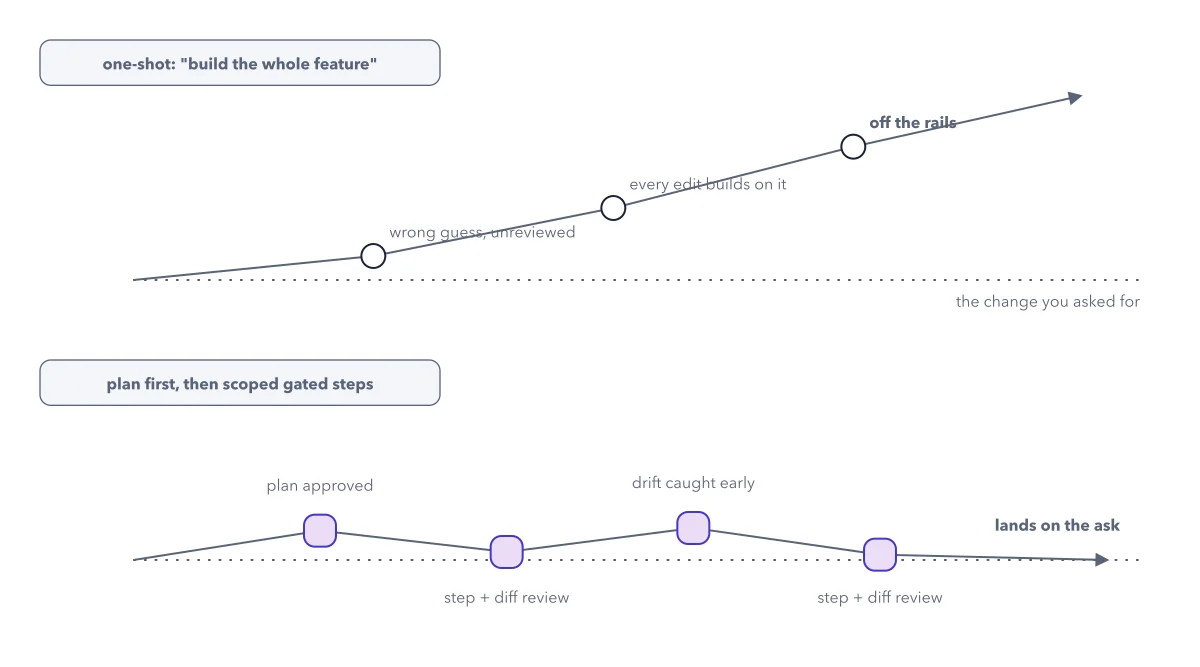
The same task, two trajectories
2026-10-16
In the one-shot run, an early unreviewed guess compounds with every edit stacked on top of it. With a plan gate and scoped steps, each review pulls the work back toward the target before drift gets expensive.
Below: the paragraph from the book that builds this idea, then the diagram itself (Figure 4.2), and a recap. About a minute of reading.
The fix is not typing more carefully. It is structural. Move the thinking to a phase where mistakes are cheap: a wrong sentence in a plan costs one reply to correct, while a wrong assumption baked into thirty edits costs an afternoon. Then implement in scoped steps with a review between them, so drift is caught while it is one correction wide. The docs agree from the other direction: Plan mode is the recommended route for complex features and multi-file refactors; the direct prompt is for changes you can already describe exactly. The figure below shows the same task run both ways.
Recap
- The idea: In the one-shot run, an early unreviewed guess compounds with every edit stacked on top of it.
- The picture: Figure 4.2, from chapter 4 ("The Core Workflow: Plan, Approve, Implement, Commit") of Kimi Code Made Crystal Clear.
- Go deeper: the chapter builds this step by step, with recipes and sources at the end.
This diagram is one of many in Kimi Code Made Crystal Clear.
Every chapter opens with the gist, draws the hard ideas, and ends with recipes and sources.
Get the book