OpenClaw Made Crystal Clear · chapter 2: The Mental Model
The message path
2026-09-16
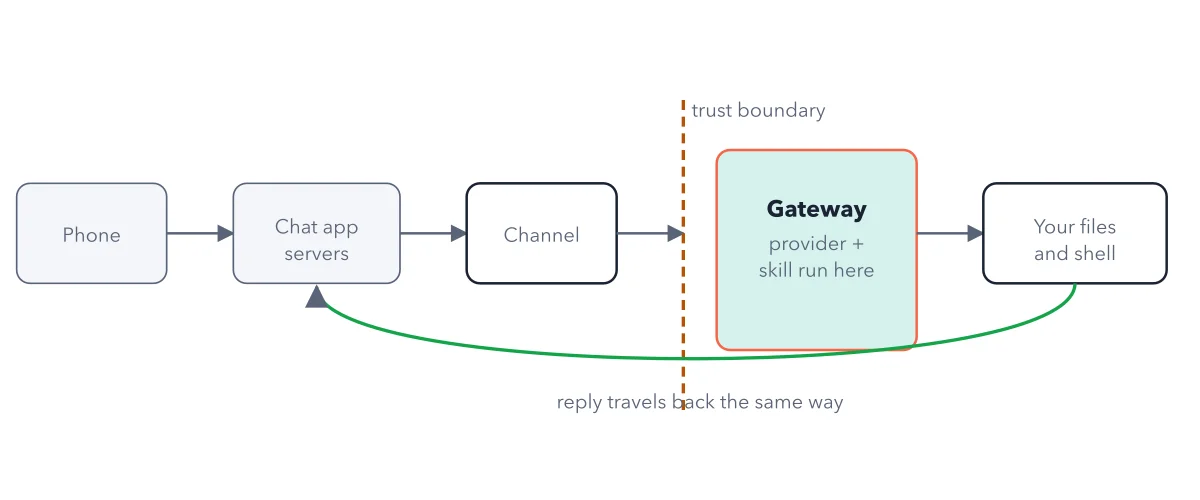
Everything left of the dashed line is outside your control. Everything right of it, including every tool the agent can call, sits inside one trust boundary.
Below: the paragraph from the book that builds this idea, then the diagram itself (Figure 2.1), and a recap. About a minute of reading.
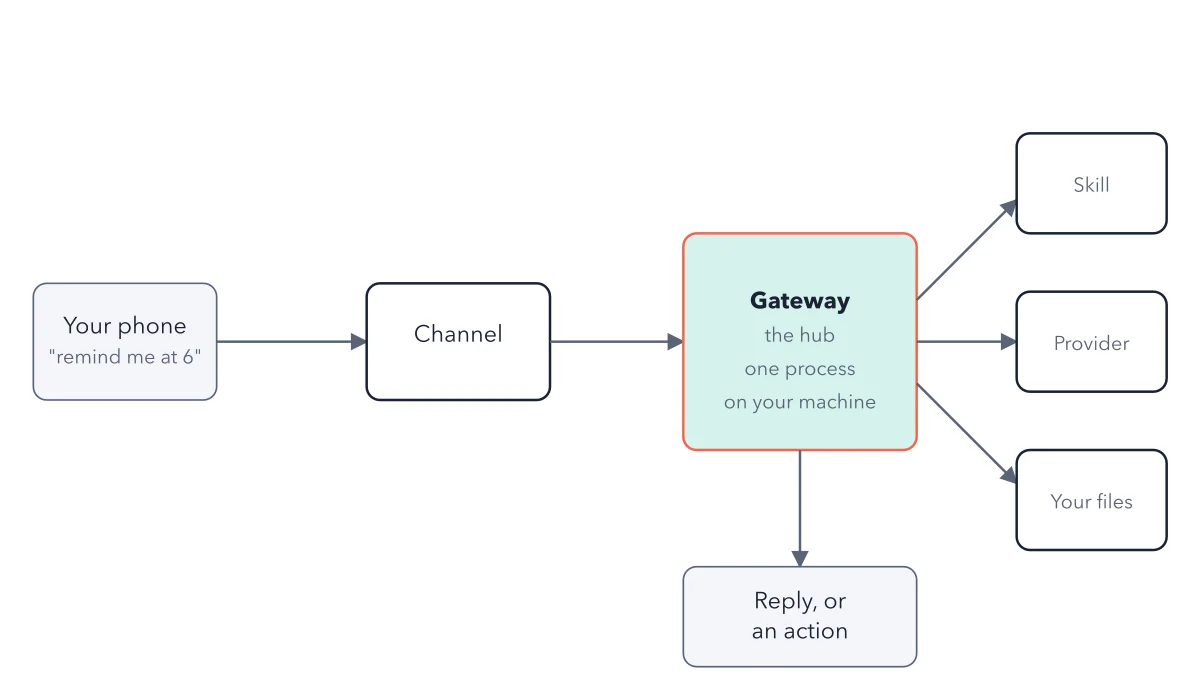
Walk through a concrete example. You text "remind me at 6" from your phone. Telegram's servers deliver that text to your Telegram channel adapter, which hands it to the gateway as a request. The gateway's agent asks the model provider what this message means and decides it needs the cron skill, not just a reply. The skill schedules a job; the gateway streams back a confirmation event, then a final response. Six o'clock arrives, the cron skill fires on its own, and a brand-new message, one you never typed, goes out through the same channel to the same chat. Nothing about that later message required you to be present, which is exactly the convenience the product sells, and exactly why Chapter 3 asks what else could trigger an action you never typed.
Recap
- The idea: Everything left of the dashed line is outside your control.
- The picture: Figure 2.1, from chapter 2 ("The Mental Model") of OpenClaw Made Crystal Clear.
- Go deeper: the chapter builds this step by step, with recipes and sources at the end.
This diagram is one of many in OpenClaw Made Crystal Clear.
Every chapter opens with the gist, draws the hard ideas, and ends with recipes and sources.
Get the book