AI Agents Made Crystal Clear · chapter 3: When NOT to Build an Agent
The decision tree
2026-09-16
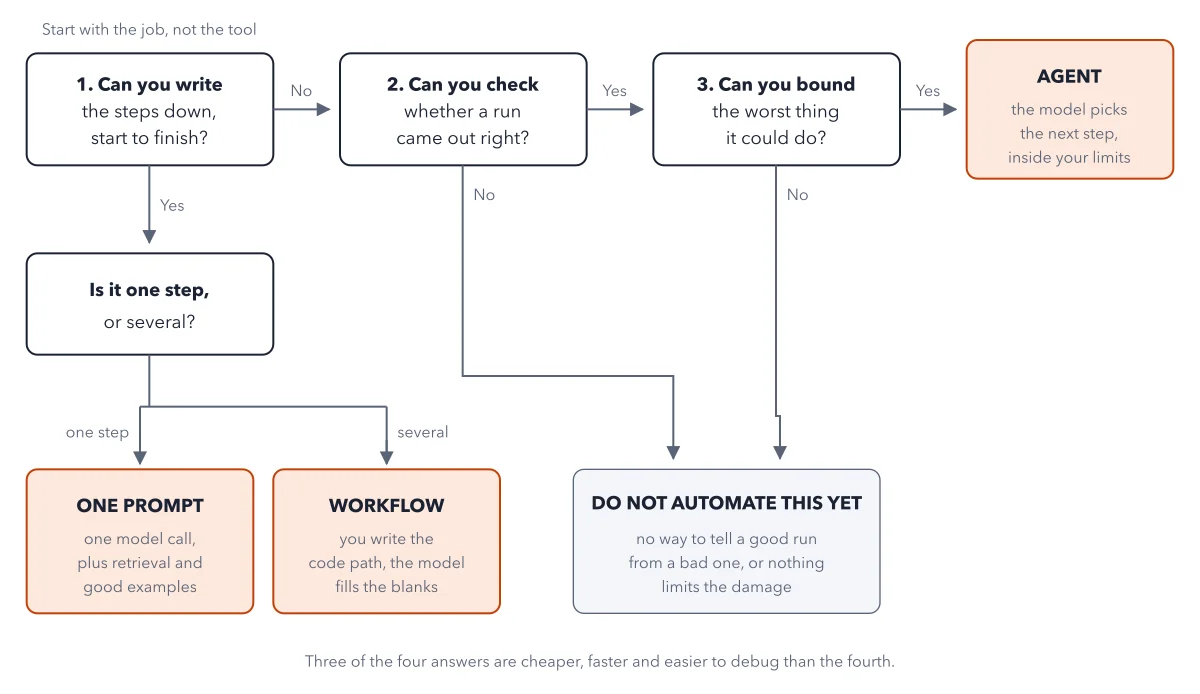
Question 1 comes from Anthropic's rule that agents are for problems whose number of steps cannot be predicted. Questions 2 and 3 are what makes autonomy survivable once you get there.
Below: the paragraph from the book that builds this idea, then the diagram itself (Figure 3.1), and a recap. About a minute of reading.
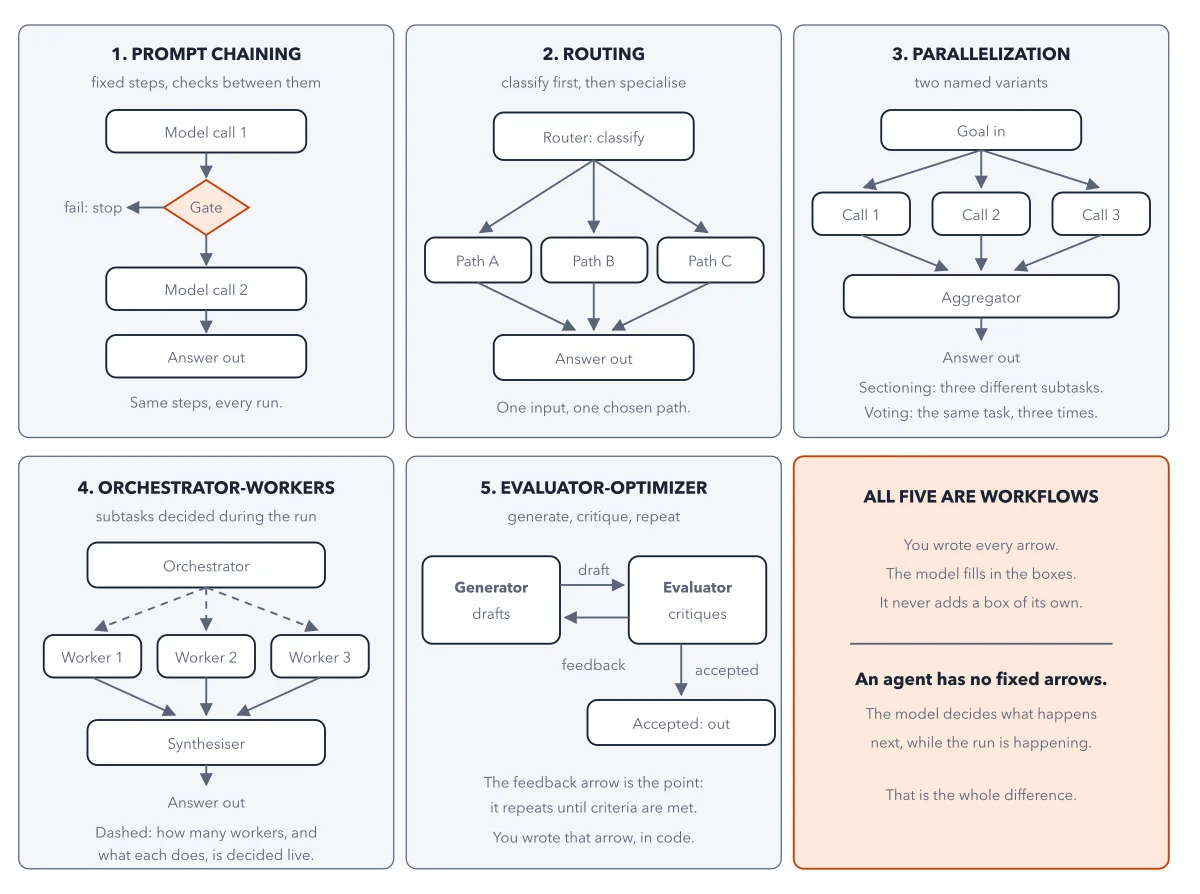
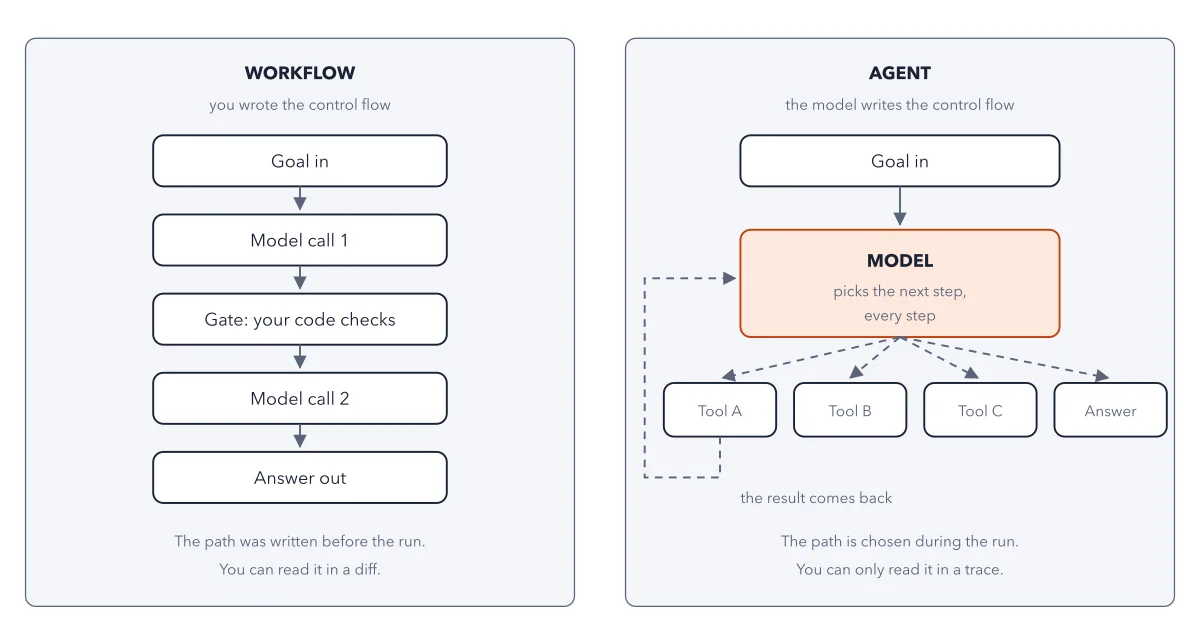
Anthropic's guidance prescribes an order rather than a preference: start with a single model call, optimize it with retrieval and in-context examples, evaluate it properly, add a workflow only if that falls short, and reserve an agent for "open-ended problems where it's difficult or impossible to predict the required number of steps." Figure 3.1 turns that order into three questions and four possible answers. Read it as a spine: every question you pass takes you one step closer to an agent, and dropping off the spine at any point is a win, not a failure.
Recap
- The idea: Question 1 comes from Anthropic's rule that agents are for problems whose number of steps cannot be predicted.
- The picture: Figure 3.1, from chapter 3 ("When NOT to Build an Agent") of AI Agents Made Crystal Clear.
- Go deeper: the chapter builds this step by step, with recipes and sources at the end.
This diagram is one of many in AI Agents Made Crystal Clear.
Every chapter opens with the gist, draws the hard ideas, and ends with recipes and sources.
Get the book