Vercel Made Crystal Clear · chapter 2: The Mental Model: Git Push to Served Request
Deployment lifecycle
2026-10-10
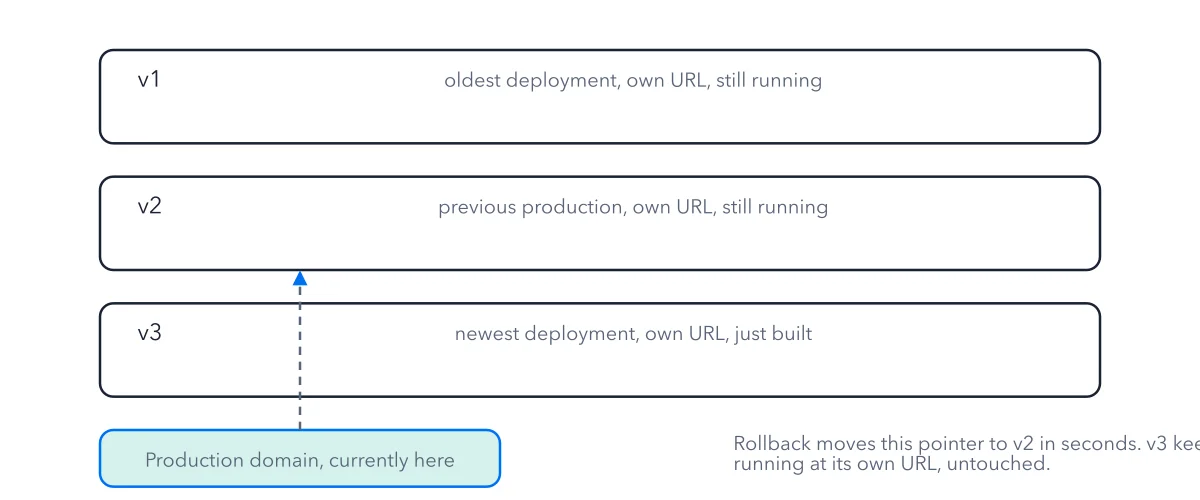
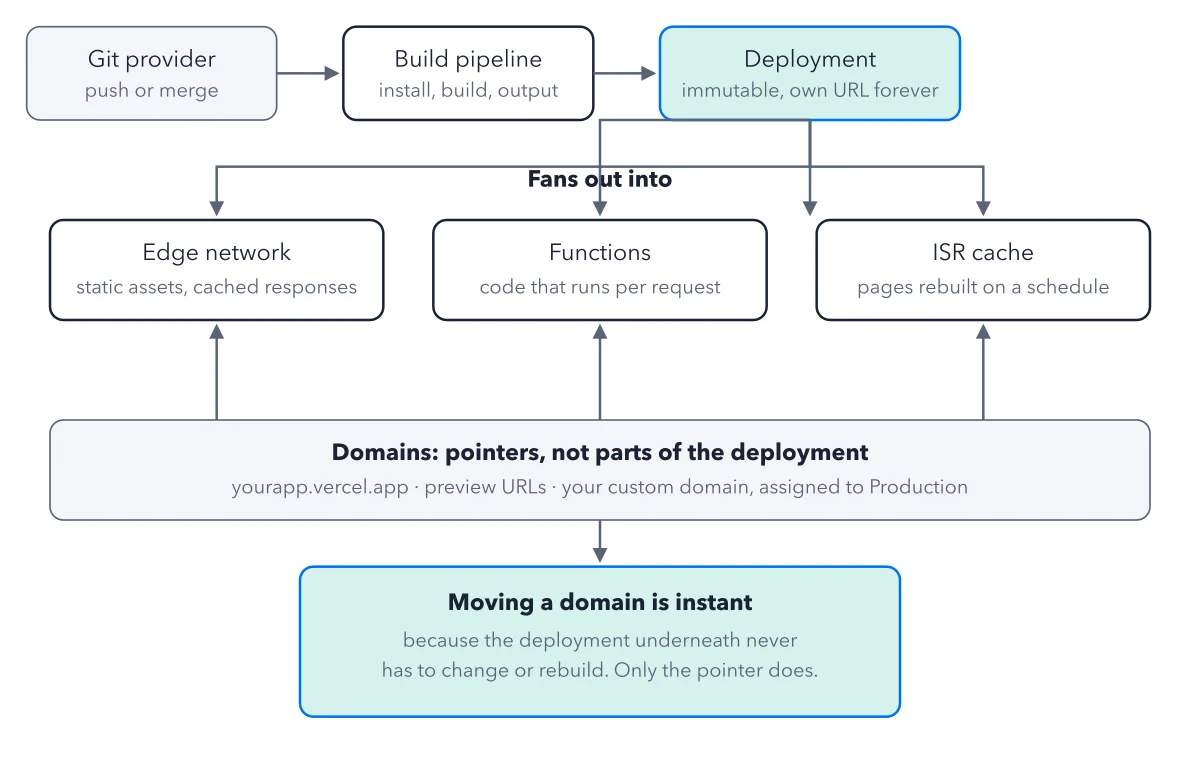
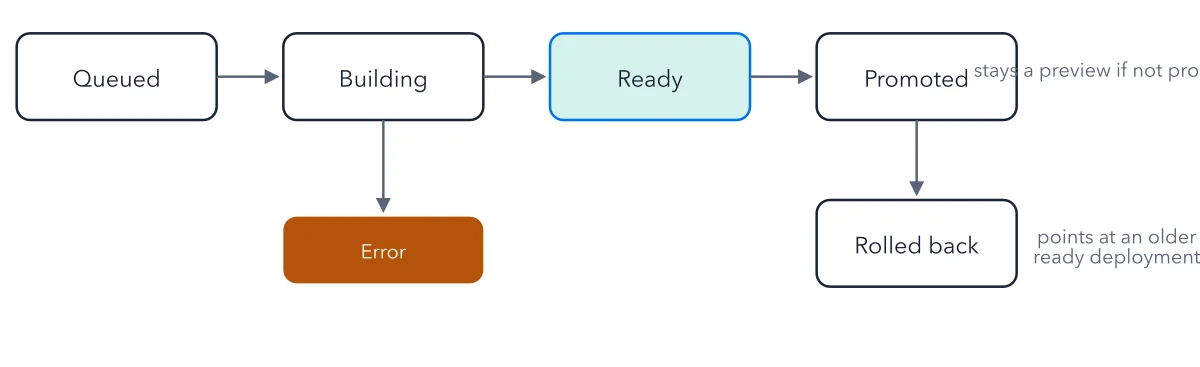
A build that fails never reaches ready. A ready deployment may stay a preview or be promoted. Rolling back repoints production at an older ready deployment; nothing here is ever edited in place.
Below: the paragraph from the book that builds this idea, then the diagram itself (Figure 2.3), and a recap. About a minute of reading.
A deployment moves through a small number of states on its way to serving traffic, and naming them correctly makes debugging much faster later in this book. It is queued while it waits for a build slot, building while the install and build commands run, and ready once the build succeeds and artifacts are uploaded. From ready, a deployment may sit as a preview indefinitely, or be promoted to production. A production deployment can later be replaced by a rollback, at which point the domain is rolled back to point at an earlier one, while the deployment that was just replaced keeps existing and keeps working at its own URL. A build that fails at any point before ready moves to an error state instead, and produces no deployment.
Recap
- The idea: A build that fails never reaches ready.
- The picture: Figure 2.3, from chapter 2 ("The Mental Model: Git Push to Served Request") of Vercel Made Crystal Clear.
- Go deeper: the chapter builds this step by step, with recipes and sources at the end.
This diagram is one of many in Vercel Made Crystal Clear.
Every chapter opens with the gist, draws the hard ideas, and ends with recipes and sources.
Get the book