Grok Bot Made Crystal Clear · chapter 4: What It Costs
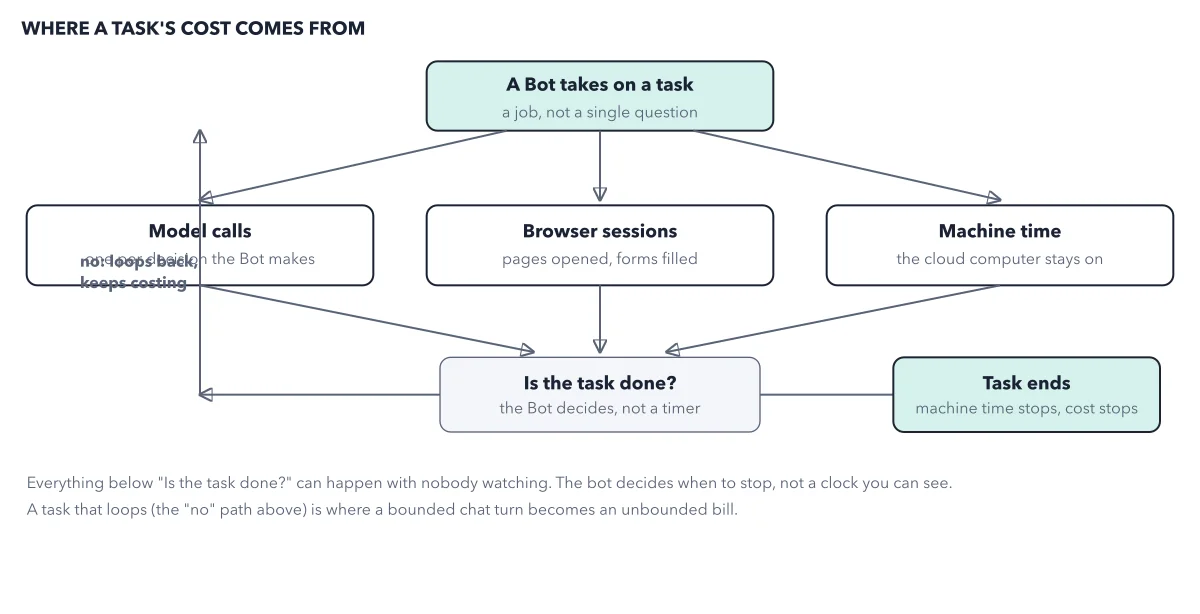
A task's cost comes from model calls, browser sessions, and machine time
2026-10-22
All three can keep running, unattended, until the Bot itself decides the task is done.
Below: the paragraphs from the book that build this idea, then the diagram itself (Figure 4.1), and a recap. About a minute of reading.
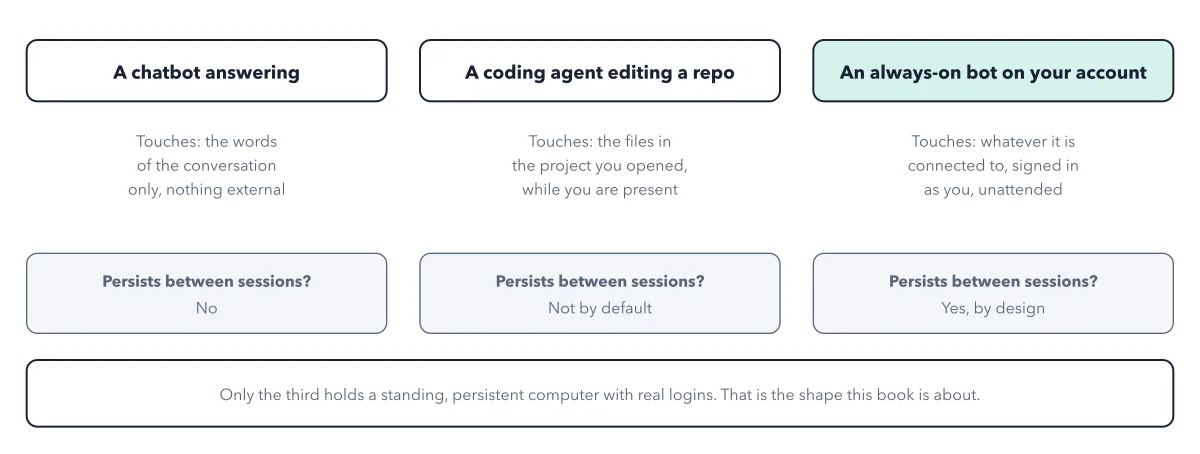
A chatbot has a natural stopping point built into how you use it: you ask, it answers, the conversation ends when you close the tab. Cost tracks conversations, and conversations track your attention. An always-on agent breaks that link on purpose, because working while you are not watching is the entire point of the product. That is the sentence to hold onto in this chapter: a task that loops costs money for as long as it loops, and nothing about the product design requires a human to be present while the meter runs.
Figure 4.1 traces where a single task's cost actually comes from, and which parts of that cost keep accruing after you stop paying attention to the bot.
Recap
- The idea: All three can keep running, unattended, until the Bot itself decides the task is done.
- The picture: Figure 4.1, from chapter 4 ("What It Costs") of Grok Bot Made Crystal Clear.
- Go deeper: the chapter builds this step by step, with recipes and sources at the end.
This diagram is one of many in Grok Bot Made Crystal Clear.
Every chapter opens with the gist, draws the hard ideas, and ends with recipes and sources.
Get the book