

Fly.io
Made Crystal Clear
 By Christophe Paka · Updated September 4, 2026
A practical, visual guide to running real apps close to your users, and knowing what it costs
Prefer it on your Kindle, or on paper? Same book, on Amazon.
Who this book is for
In plain words: Fly.io runs your app on servers in many cities at once, so it is fast for users everywhere, and you pay for what you use.
- Developers running a real app close to their users
- Teams leaving Heroku or weighing a plain VPS
- Not for: Not for you if you only need a static website. Try Vercel Made Crystal Clear.
Fly.io runs your app as a real long-running process in a microVM, close to your users, on one anycast address. It is genuinely good at that. It also has no free tier, bills by the second, and carries a reliability history people still argue about using numbers from 2023. This guide handles all three honestly: the exact rate card, a dated outage timeline, and the volume model that has cost people data. Then the platform properly, ending with a money chapter whose answer is not always Fly.io.
- Pages
- 154
- Level
- Beginner to advanced
- Updated
- September 4, 2026
12 real pages. Click a page to enlarge it.
Inside the book
- 01What Fly.io Actually Is
- 02The Mental Model: Deploy to Served Request
- 03Your First Deploy
- 04What Fly.io Actually Costs
- 05The Reliability Question, Dated Honestly
- 06fly.toml and Configuration
- 07Machines, Autostart, and Scale to Zero
- 08Regions, Anycast, and Being Close to Users
- 09Networking: Public, Private, and Flycast
- 10Volumes and Persistent State
- 11Databases: Managed Postgres and the Legacy Story
- 12Deploys, Health Checks, and Rollback
- 13Observability and Debugging a Live App
- 14The Business Case, and the Alternatives
- 15The Playbook, Cheat Sheet, and Where to Go Next
You'll leave with
- Tell a Fly Machine apart from a container and from serverless
- Trace a request from anycast edge to the nearest healthy machine
- Price your app exactly: there is no free tier, and stopped is not free
About the author
Christophe Paka writes every book on the shelf. He spent years in technical support at Salesforce and Microsoft, where the job was to make complex systems clear to customers who needed them working the same day. He has since built and run software as a founder and lead developer, worked as a Salesforce consultant, and grown a YouTube channel on tech careers past one million views.
This book was last updated on September 4, 2026.
Connect on LinkedIn →For teams
Put Fly.io on every desk at your company.
One licence, every book in the series, one link for everyone. From $250 a year.
Sources
Every source cited in Fly.io Made Crystal Clear. Each number matches the [n] marker next to that link in the book's "Go deeper" lists, so you can trace any claim back to its origin.
- [1]Fly.io documentation home
- [2]Fly Machines: comprehensive overview
- [3]Machines API reference
- [4]Fly.io raises $25 million Series D and appoints Scott Johnston as CEO
- [5]fly deploy reference
- [6]Fly.io networking: services
- [7]flyctl install
- [8]fly launch
Show all 39 sources
- [9]Health checks reference
- [10]fly logs
- [11]fly ssh console
- [12]Resource pricing reference
- [13]Fly.io pricing overview
- [14]Free trial documentation
- [15]Discontinued plans
- [16]Billing documentation
- [17]Cost management guidance
- [18]"Reliability: It's Not Great," Fly.io community forum, March 2023
- [19]"Fly.io Postgres cluster down for 3 days, no word from them about it," Hacker News, July 2023
- [20]"I was an early adopter of Fly.io. It is not production-ready," Hacker News, February 2024
- [21]"Reliability / Stability Pulse Check," Fly.io community forum, August 2025
- [22]"Fly Away from Fly.io," Jonas Scholz, June 2025
- [23]"Fly.io Reliability, SLA and Production Risks in 2026," Kuberns, 2026
- [24]Fly.io status page
- [25]fly.toml configuration reference
- [26]Fly.io secrets and environment variables docs
- [27]Fly.io multi-process apps and process groups docs
- [28]Fly App Scaling
- [29]OpenStatus: monitoring latency across Cloudflare Workers, Fly, Koyeb, Railway, and Render
- [30]Fly Volumes: overview
- [31]Fly.io regions reference
- [32]Fly.io: Private Networking (6PN)
- [33]Fly.io: Flycast
- [34]Fly.io: LiteFS
- [35]Fly.io: Managed Postgres (MPG)
- [36]Fly.io: Fly Postgres (unmanaged)
- [37]Fly.io: Upstash for Redis
- [38]Fly.io: Builders reference
- [39]Fly.io: Metrics reference
Also in the series
37 more titles, one tool or topic each. Swipe or use the arrows.

AI Go To Market
Available
Higgsfield
Available
Kubernetes
Available
Cloudflare
Available
Jev
Available
Supabase
Available
AI Video
Available
Zernio
Available
Make.com
Available
Codex
Available
Hugging Face
Available
Modal
Available
Lovable
Available
Vapi
Available
n8n
Available
AI Agents
Available
Tech Hiring
Available
ElevenLabs
Available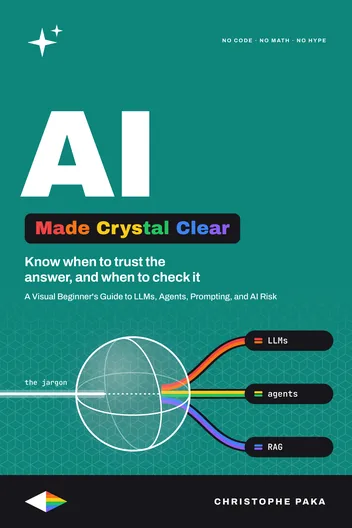
AI
Available
Claude Code
Available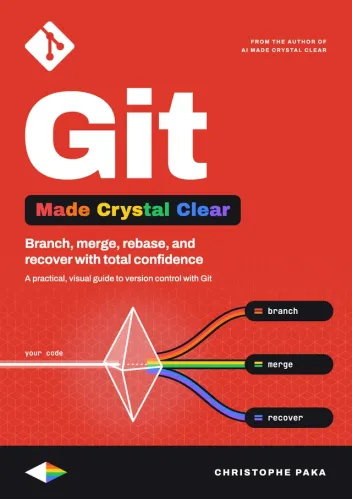
Git
Available
Kimi Code
Available
Hermes Agent
Available
GitHub
Available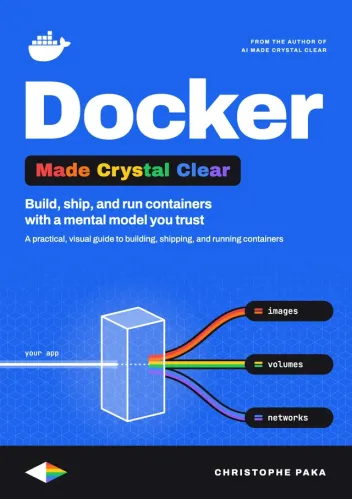
Docker
Available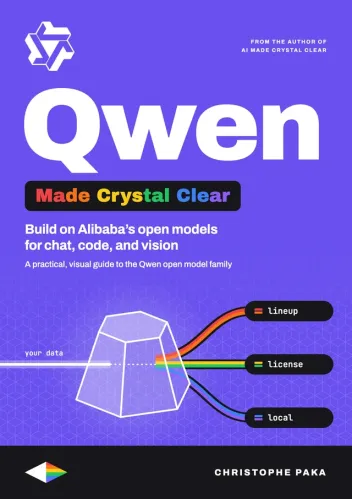
Qwen
Available
Llama
Available
DeepSeek
Available
OpenRouter
Available
GLM
Available
Gemini
Available
Mistral
Available
OpenClaw
Available
Grok Bot
Available
Vercel
Available
Cursor
Available
The +1 Method
AvailableNew books, in your inbox
One short note when a new Made Crystal Clear guide ships.
No spam, unsubscribe anytime.